Life Insurance Is Not Just for “Later”: Why Younger Families Should Think About It Now

Life Insurance Is Not Just for “Later”: Why Younger Families Should Think About It Now
Why People Keep Putting Life Insurance Off
A lot of people treat life insurance like something they will deal with later. Later when they get older. Later when they make more money. Later when they buy a house. Later when they have children. Later when life feels more serious. The problem is that life does not always wait for the perfect time. Many people are already carrying real responsibilities even if they do not think of themselves as someone who “needs” life insurance yet. They may have rent, car payments, credit card debt, student loans, a spouse, a child, a business, or family members who depend on them. Life insurance is not only for people near retirement. It is for anyone whose absence would create financial stress for the people they care about.
Life Insurance Is Really About Responsibility
Life insurance is not just about age. It is about responsibility. If someone depends on your income, your time, your care, or your support, then life insurance should be part of the conversation. A young couple may need both incomes to afford rent or a mortgage. A new parent may need coverage because their child has years of future expenses ahead. A business owner may need protection because their family and company depend on them. Even a single person may need coverage if their family would have to pay for funeral costs, unpaid debts, or other final expenses. The real question is not, “Am I old enough for life insurance?” The better question is, “Would someone struggle financially if I was gone?”
The “I’m Too Young” Mindset Can Be Risky
One of the most common reasons people avoid life insurance is because they believe they are too young to need it. Being young can make people feel like they have unlimited time to plan. But being young does not mean life is risk-free. Accidents, illnesses, and unexpected events can happen at any age. Nobody likes to think about that, but planning for it does not mean you are being negative. It means you are being responsible. In fact, younger adults may have an advantage when it comes to life insurance because they may qualify more easily and may be able to lock in more affordable coverage. Waiting until later can make things harder if your health changes or your responsibilities grow.

Starting Early Can Give You More Options
Getting life insurance earlier in life can give you more options. When you are younger and healthier, coverage may be easier to qualify for and may cost less than it would later. As people get older, health changes can happen. Blood pressure, diabetes, weight changes, medical history, prescriptions, or other health conditions can affect what coverage is available and how much it costs. Some people wait until they have a major life event, only to find out that coverage is more expensive than they expected. Starting early helps you plan before life becomes more complicated. It also gives your family protection sooner instead of leaving them exposed while you wait for the “right time.”
Life Insurance Protects the Life You Are Building
Younger families are often in the middle of building their lives. They may be saving for a home, paying down debt, growing a business, raising children, or working toward a better future. This stage can be exciting, but it can also be financially fragile. Many younger families do not have large savings yet. They may be depending on every paycheck. They may have more debt than assets. If one person suddenly passed away, the surviving family members could be left with bills they cannot afford on their own. Life insurance helps protect the life you are building. It gives your loved ones a financial backup plan if the future you were working toward is suddenly interrupted.
The First Year After a Loss Can Be Financially Hard
The first year after losing a loved one can be one of the hardest times for a family. There is grief, shock, stress, and confusion. But at the same time, bills still come due. Rent or mortgage payments still have to be made. Groceries still need to be bought. Car payments, utilities, phone bills, childcare, and insurance premiums do not stop because a family is hurting. If the person who passed away helped pay those bills, the financial pressure can show up almost immediately. Life insurance can give a family breathing room during that first year. It can help them cover important expenses while they grieve and figure out the next steps.

Life Insurance Gives Your Family Time
One of the most valuable things life insurance can provide is time. Money cannot replace a person, and it cannot remove grief. But it can give a family time to make decisions without panic. It can give a surviving spouse time to adjust. It can give children time to keep their routines. It can give a family time to decide whether to stay in their home, change jobs, move closer to relatives, or make other major life choices. Without financial support, families may feel forced to make rushed decisions during one of the most painful times of their lives. Life insurance helps slow things down and gives loved ones space to breathe.
Debt Does Not Always Disappear Easily
Many younger adults and families carry some kind of debt. This may include credit cards, car loans, student loans, personal loans, medical bills, or a mortgage. Some debts may not legally pass to other family members, but the financial pressure can still affect them. A surviving spouse may be responsible for shared debts. A family may still need to handle final expenses. If a couple bought a home together, one income may not be enough to keep up with the mortgage. Even smaller debts can become stressful when a household suddenly loses income. Life insurance can help reduce the burden by giving the family money to pay off or manage financial obligations.
Rent, Mortgage, and Housing Stability Matter
Housing is one of the biggest reasons younger families should think about life insurance. Whether a family rents or owns a home, housing costs are usually one of the largest monthly expenses. If one income disappears, the surviving family may struggle to keep up. They may have to move quickly, downsize, sell the home, or rely on relatives for help. This can be especially hard when children are involved because losing a parent is already a major emotional change. Life insurance can help a family stay in their home while they adjust. It can protect housing stability during a time when everything else feels unstable.
Young Parents Have Even More to Protect
For young parents, life insurance can be especially important. Children depend on their parents for almost everything: food, housing, clothing, school supplies, medical care, transportation, activities, and emotional support. If one parent passes away, the surviving parent may be left trying to provide everything alone. They may need extra childcare, more help with transportation, or time away from work. They may also need money to support the child’s future education and long-term needs. Life insurance helps make sure children are financially protected even if one parent is no longer there. It is one way parents can continue caring for their children, even in the worst situation.
Stay-at-Home Parents Need Protection Too
Life insurance is not only for the person who earns the most money. Stay-at-home parents and caregivers also bring major value to a household. They may handle childcare, cooking, cleaning, transportation, school schedules, appointments, errands, and many daily responsibilities. If that person was suddenly gone, the surviving parent might have to pay for services they never had to pay for before. Childcare alone can be expensive. Add in transportation, housekeeping, meal preparation, and help with daily routines, and the financial impact can be serious. Life insurance for a stay-at-home parent is not about replacing a paycheck. It is about helping the family replace the support that person gave every day.
Employer Life Insurance May Not Be Enough
Some people think they already have life insurance because their job provides it. Employer-provided life insurance can be helpful, but it may not be enough. Many workplace policies only provide a small amount of coverage, such as one or two times your salary. For a family with children, a mortgage, debts, and years of future expenses, that may not go very far. Another issue is that employer coverage is usually tied to the job. If you leave the company, get laid off, or change careers, you may lose that coverage. Having your own policy can give you more control and stability because it is not dependent on your employer.
Life Insurance Can Protect More Than Income
A lot of people think life insurance is only about replacing income, but it can protect much more than that. It can help cover funeral costs, medical bills, debt, childcare, mortgage payments, rent, groceries, and future education expenses. It can also help protect long-term goals. For example, if you wanted your children to go to college, life insurance can help keep that goal possible. If you wanted your spouse to stay in the home, coverage can help make that possible. If you wanted your family to avoid taking on more debt, life insurance can help prevent that. It is not just about one paycheck. It is about the full financial picture.
Business Owners Should Think About Coverage Early
Young business owners often have even more reasons to consider life insurance. A business can depend heavily on one person’s leadership, income, relationships, and daily work. If that person passes away, the business may struggle. There may be business loans, employees, partners, contracts, or customers affected. Life insurance can help provide money to keep the business running, pay off debts, support the owner’s family, or give loved ones time to decide what to do next. For business owners, life insurance can be both a family protection tool and a business protection tool. It helps prevent one unexpected event from creating financial problems for many people.
Life Insurance Should Fit Your Real Life
There is no single life insurance plan that fits everyone. A single person with no children may need a different amount than a married couple with a mortgage. A parent with three children may need more coverage than someone who only wants to cover final expenses. A business owner may need a different plan than someone working a regular job. That is why life insurance should be personal. It should be based on your income, debts, monthly bills, family size, future goals, and budget. The goal is not to buy the biggest policy possible. The goal is to choose coverage that makes sense for your actual life.
A Simple Way to Think About Coverage
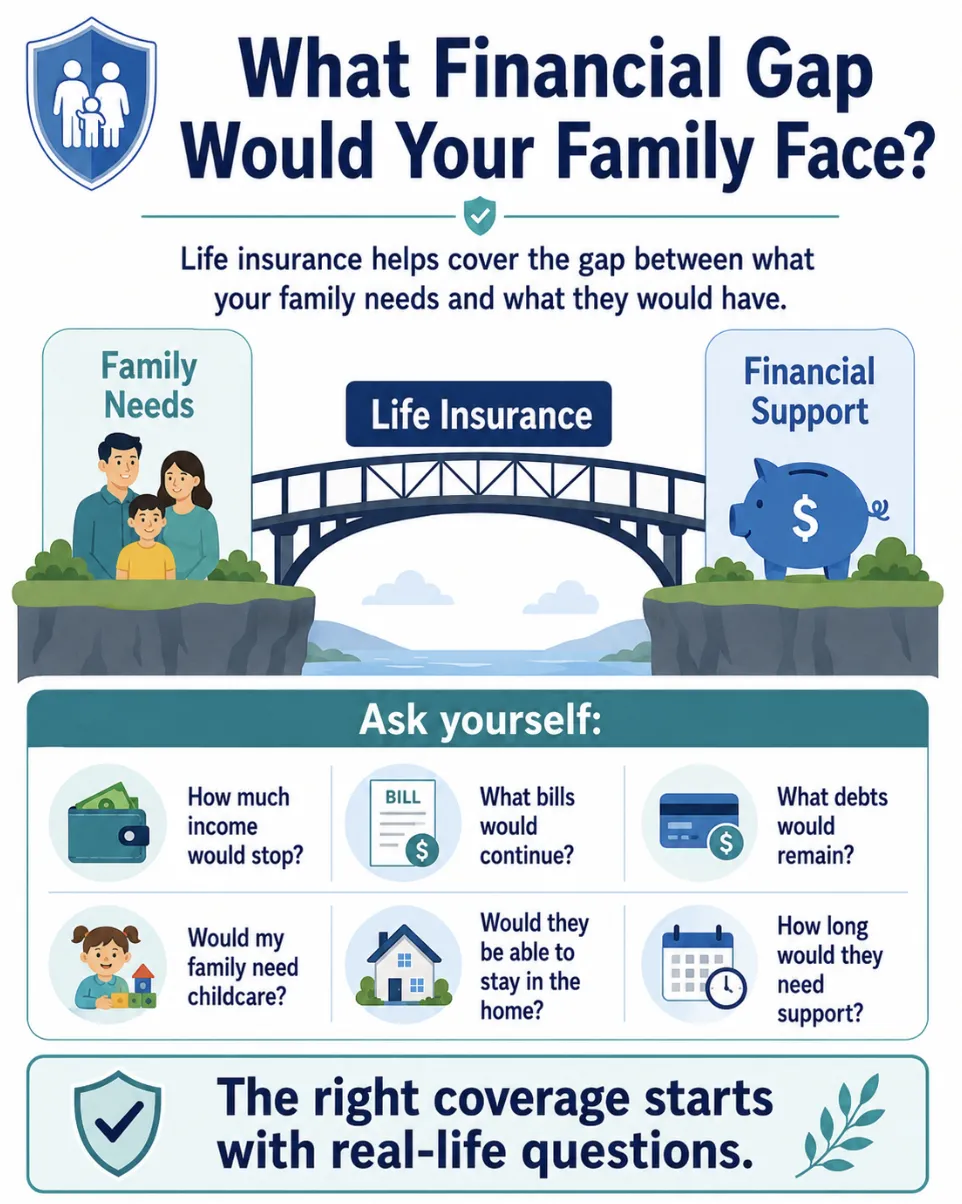
A helpful way to think about life insurance is to imagine the financial gap you would leave behind. If your income stopped tomorrow, how much money would your family lose each month? What bills would continue? How much debt would remain? How long would your family need support? Would your spouse need time off work? Would your children need childcare or school support? Would your family need help staying in the home? These questions may feel serious, but they make the planning process easier. Instead of guessing, you can build coverage around real needs. Life insurance works best when it is connected to the life your family actually lives.
It Is Not About Fear
Some people avoid life insurance because they feel like thinking about it is scary or negative. But life insurance is not about fear. It is about love, preparation, and responsibility. Nobody buys life insurance because they expect something bad to happen tomorrow. They buy it because they understand that life is uncertain and their family deserves protection. Planning ahead does not mean you are living in fear. It means you are being thoughtful about the people who depend on you. In many ways, life insurance is one of the most caring financial decisions a person can make because it focuses on protecting others.

The Best Time to Plan Is Before Life Gets More Complicated
Many people wait for a major life event before thinking about life insurance. They wait until marriage, a new baby, a home purchase, or a health scare. Those are important times to review coverage, but you do not have to wait for them to get started. The earlier you begin, the more prepared you can be. Life tends to get more complicated over time. Bills grow. Families grow. Debt changes. Health can change. Responsibilities increase. Starting early allows you to put protection in place before everything becomes urgent. It also gives you peace of mind knowing your family already has a plan.
Life Insurance Can Grow With You
Your first life insurance policy does not have to be your final plan forever. Life changes, and your coverage can be reviewed as those changes happen. You may need more coverage after getting married, having children, buying a home, starting a business, or taking on new financial responsibilities. You may need to adjust your plan as debt decreases or savings increase. The important thing is to start with a plan that fits your current situation, then review it over time. Life insurance is not something you have to understand perfectly on day one. It is something you can build and adjust as your life grows.
Your Family’s Future Is Worth Protecting
At the end of the day, life insurance is about protecting the people you love. It helps make sure your family is not left facing financial stress alone if something unexpected happens. It can help pay bills, protect housing, cover debt, support children, and give loved ones time to grieve without rushing into major financial decisions. Younger families often have the most to protect because they are still building their future. Waiting may feel easier, but planning early can make a major difference. Life insurance is not just for later. It is for the life you are building now and the people who depend on you today.
