
What Would Happen to Your Family Financially If You Were Gone Tomorrow?

What would happen to your family financially if you were gone tomorrow?
It is not a question most people like to think about. But it is one of the most important questions a family can ask.
For many people, the first thought is emotional. They think about the people they love, the memories they have made, and the pain their family would feel. But after the first wave of grief, another reality often appears very quickly. Bills still come due. Rent or mortgage payments still have to be made. Groceries still need to be bought. Children still need care. Debt does not disappear. Life does not pause financially just because a family is hurting emotionally.
That is where life insurance becomes important.
Life insurance is not just a policy. It is not just a monthly payment. It is a financial backup plan for the people you love most. It is a way to make sure your family has support if they suddenly have to move forward without your income, your help, or your daily contribution to the household.
Most people do not buy life insurance because they expect something bad to happen. They buy it because they understand that protecting their family is part of planning responsibly. Life insurance is not about fear. It is about love, preparation, and peace of mind.
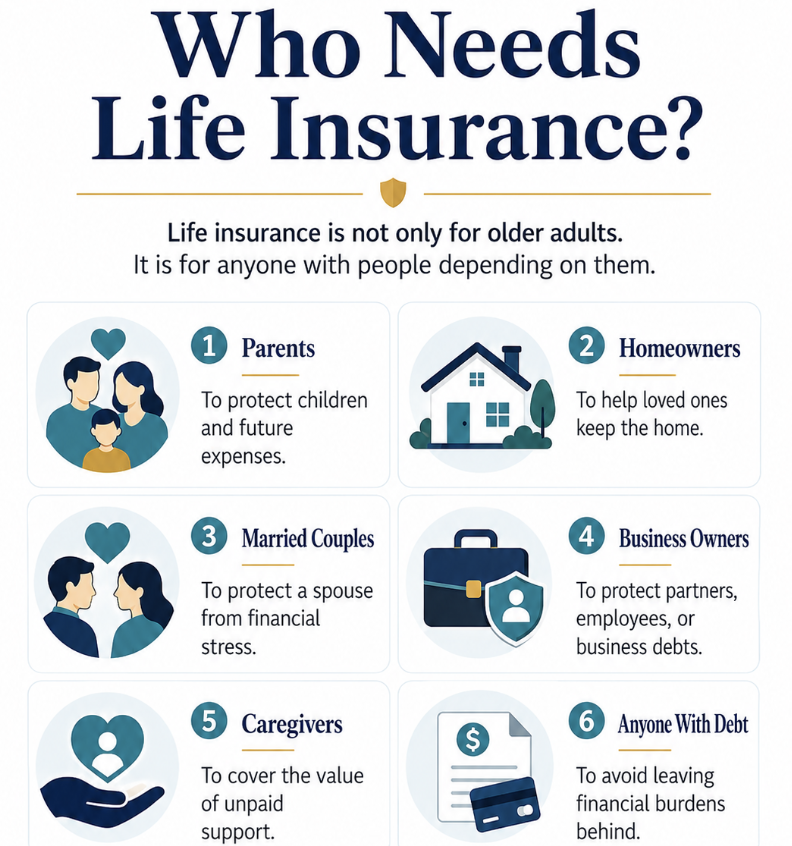
Every family has responsibilities. Some families have a mortgage. Some have rent. Some have car payments, credit card debt, personal loans, or student loans. Some have young children who will need years of financial support. Others may have aging parents or family members who depend on them. Even if you do not think of yourself as the main provider, your role still matters. Your income, your time, and your support may be a major part of how your family functions.
If that support disappeared overnight, would your family be able to continue without financial pressure?
That is the question life insurance helps answer.
The right life insurance coverage can help your family stay in their home, pay off debt, handle final expenses, replace lost income, and protect long-term plans. It can give your loved ones time to grieve without forcing them into immediate financial decisions. During one of the hardest times of their lives, they should not have to wonder how they will pay the next bill.
Many people wait to get life insurance because they believe they have more time. They may think they are too young, too healthy, or too busy to worry about it right now. Others assume life insurance is only for older adults or people with children. But the truth is, life insurance can be valuable for anyone who has people depending on them financially.
If someone would struggle financially without you, life insurance should be part of the conversation.
That could mean a spouse who depends on your income. It could mean children who rely on you for food, housing, school, clothing, and care. It could mean parents you help support. It could mean a business partner who would be affected if you were no longer there. It could even mean family members who would have to cover funeral costs or unpaid debts if you passed away unexpectedly.
Life insurance helps reduce that burden.
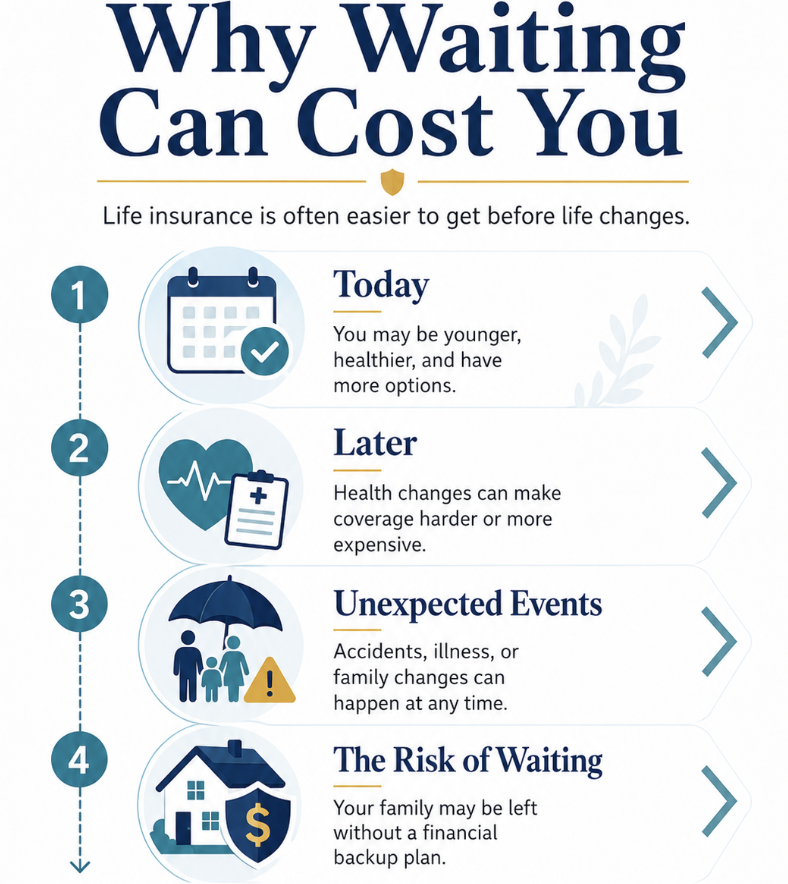
One of the most common reasons people avoid life insurance is because they think it will be too expensive. In reality, many people are surprised to learn that coverage can be more affordable than they expected, especially when they are younger and healthier. Waiting can sometimes make coverage more expensive or harder to qualify for. Health changes, age, and lifestyle factors can all affect your options.
That is why starting early can make a big difference.
Another reason people put it off is because life insurance can seem confusing. There are different types of policies, different coverage amounts, different terms, and different companies. For someone who has never looked into it before, the process can feel overwhelming. But it does not have to be.
You do not need to know every insurance term before getting started. You do not need to figure everything out alone. A good insurance professional can explain your options in simple terms, help you compare choices, and guide you toward coverage that fits your family, your goals, and your budget.
At its core, life insurance answers a simple question: if something happened to you, would your loved ones have the financial support they need?
For many families, the answer without life insurance is uncertain.
Funeral and burial expenses alone can create sudden financial stress. On top of that, families may still have to deal with medical bills, mortgage payments, rent, utilities, transportation costs, childcare, and everyday living expenses. If the person who passed away was earning income, the loss can be even more serious. A family may have to adjust their entire lifestyle while also dealing with grief.
Life insurance can help create breathing room.
It can give your family time. Time to make decisions. Time to adjust. Time to grieve. Time to figure out the next steps without being forced to make rushed financial choices. That time can be one of the most valuable gifts you leave behind.
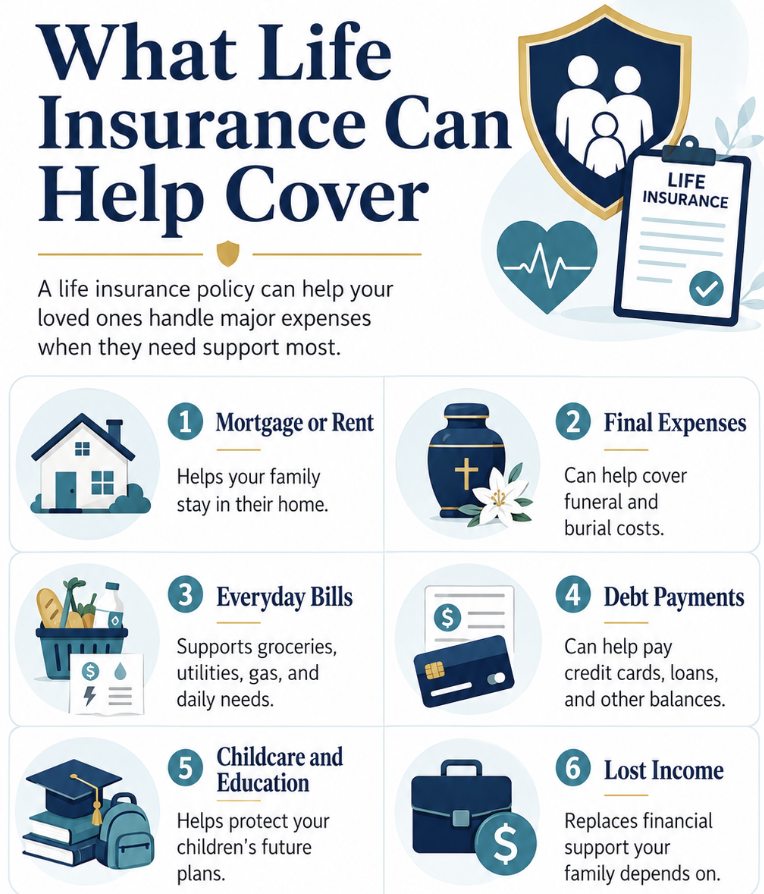
Life insurance can also protect your family’s future. For example, if you have children, coverage can help support their education, activities, and long-term needs. If you have a mortgage, it can help your family stay in the home you worked hard to provide. If you have debt, it can help prevent that debt from becoming a heavier burden on your loved ones.
It is easy to think, “I will handle it later.” But later is not guaranteed. Planning ahead is one of the most responsible things you can do for the people who count on you.
Life insurance is also not just about the person who earns the most money. Stay-at-home parents, caregivers, and spouses who provide unpaid support also bring major value to a household. If that person were gone, the family might need to pay for childcare, transportation, cooking, cleaning, or other daily responsibilities. Life insurance can help cover those costs too.
That is why life insurance should not only be looked at through income. It should also be looked at through responsibility.
Ask yourself: who depends on me? What do I help pay for? What would my family need if I were not here? What debts or expenses would still remain? What future plans would I still want protected?
These questions may feel uncomfortable, but they are important.
The goal is not to scare you. The goal is to help you prepare wisely.
A strong life insurance plan can give your family confidence. It can help them feel secure knowing there is a plan in place. It can protect the lifestyle you have worked to build. It can help make sure your loved ones are not left trying to solve financial problems during a painful time.
Life insurance is one of those things people often appreciate most when it is needed, but by then it is too late to get it. That is why making the decision before a crisis happens matters so much.
Some people also believe that life insurance through work is enough. Employer-provided life insurance can be helpful, but it may not always provide enough coverage. It may also be tied to your job, which means you could lose that coverage if you change employers or leave the company. Having your own policy can provide more control and stability.
This does not mean every person needs the same amount or the same type of coverage. Life insurance should be personal. A single person with no dependents may need a different plan than a married couple with children. A homeowner may need different coverage than someone who rents. A business owner may have different needs than someone working a traditional job.
The best policy is one that fits your actual life.
That is why it is important to look at your full picture. Your income, debts, monthly expenses, family size, future goals, and budget all matter. Life insurance is not one-size-fits-all. It should be built around what your family would truly need.
There are different types of life insurance, but two common categories are term life insurance and permanent life insurance.
Term life insurance usually provides coverage for a set period of time, such as 10, 20, or 30 years. It is often used to protect families during the years when financial responsibilities are highest. For example, someone may choose term coverage while they are paying a mortgage, raising children, or building savings.
Permanent life insurance is designed to last longer and may include additional features, depending on the policy. It can be part of a broader financial plan for some families. The right choice depends on your needs, your goals, and what you can comfortably afford.
The most important thing is not choosing the most complicated option. The most important thing is choosing coverage that protects your loved ones.
Life insurance is a promise. It says, “Even if I am not here, I still want to take care of you.” It is a way to continue protecting your family even when you cannot physically be there. That kind of protection can bring peace of mind not only to your loved ones, but also to you.
When you know your family has a plan, you can live with more confidence. You can focus on building your life, growing your business, raising your children, caring for your spouse, and enjoying your time with the people who matter most. Life insurance does not remove every risk from life, but it helps reduce the financial damage that can come from the unexpected..
You do not have to wait until a major life event to start planning. You do not have to wait until you buy a house, have another child, get married, or reach a certain age. The best time to protect your family is before they need protection.
No one can predict tomorrow. But you can prepare for it.
Life insurance is not just about what happens when you are gone. It is about how well your family is protected because you planned ahead. It is about giving them stability when life feels unstable. It is about making sure love is backed by action.
Your family is your legacy. Protecting them is one of the most meaningful decisions you can make.
Do not wait until life changes to start planning. Start protecting your family today.
